


31 Aug How Persistence, Relationships, and One Simple Ask Made History
How Relationships Helped “Wee Willie” Sherdel Reach the Cardinals Hall of Fame
Published September 2026 • 8 minute read
“Very few worthwhile things are accomplished entirely on your own.”
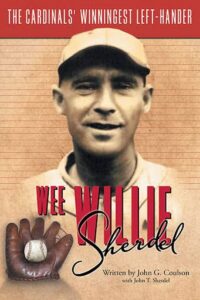
Bill “Wee Willie” Sherdel was a left-handed pitcher for the St. Louis Cardinals from 1918 to 1932, except for a brief trade to the Boston Braves in 1930. He returned to St. Louis and retired as a Cardinal in 1932.
More than 90 years later, Sherdel remains the winningest left-handed pitcher in Cardinals history and ranks fifth in total victories among all Cardinals pitchers. His name remains among the franchise’s top ten in numerous pitching categories.
He won the pennant-clinching games in both 1926 and 1928. He was also selected to start Game 1 of both World Series against Babe Ruth, Lou Gehrig, and the mighty New York Yankees.
But statistics tell only part of his story.
Bill was not a big man, but he played with tremendous courage and heart. He endured multiple personal and team tragedies throughout his life. By all accounts, he valued the team above himself and cared far more about contributing to its success than receiving individual recognition.
Perhaps that helps explain why, decades later, so few people knew his story.
A Story That Needed to Be Told
Sherdel had once been a local star, but over time, he had largely been forgotten. He lived most of his adult life in little McSherrystown, Pennsylvania, where even many local residents had no idea what he had accomplished on major-league diamonds.
I wanted to know more.
That curiosity eventually turned into two years of research and writing a book about his life and career. Along the way, I became good friends with Bill’s grandson, John—the keeper of his grandfather’s memory and memorabilia.
The more I learned, the more one question bothered me:
“How could the winningest left-handed pitcher in Cardinals history not be in the Cardinals Hall of Fame?”
I began sharing Sherdel’s story anywhere I could. I gave more than 30 presentations, participated in radio and television interviews, and even spoke about Bill at the National Baseball Hall of Fame Symposium in Cooperstown.
The reaction was remarkably consistent. People would hear his story, look at his accomplishments, and ask the same question I had:
Why isn’t this man in the Cardinals Hall of Fame?
What began as an interest became a passion and, eventually, a personal goal. I wanted to see Wee Willie Sherdel and his family receive the recognition I believed he deserved.
Persistence Wasn’t Going to Be Enough
The St. Louis Cardinals Hall of Fame was established in 2014. Its annual selection process includes fan voting for more recent players and a special Red Ribbon Panel that considers veteran players.
Each year as voting approached, I emailed members of the Red Ribbon Panel about Sherdel.
Each year, he wasn’t selected.
I kept trying. But after years of disappointment, we realized that simply repeating the same approach wasn’t likely to produce a different result. We needed to get Sherdel’s story in front of more people.
That’s when relationships began to change the trajectory of our effort.
My son-in-law, Brian Biddulph-Krentar, is an Executive-in-Residence at York College of Pennsylvania’s J.D. Brown Center for Entrepreneurship. Brian and I began discussing ways to bring Sherdel’s story to a larger audience.
Instead of simply asking, Who can get Sherdel elected?, we began asking a different question:
“Who do we know who might be willing to help us tell his story?”
Brian approached Dr. Molly Sauder, dean of the Graham School of Business at York College. Through that relationship, we connected with Dr. Michael Rohrbaugh and the college’s film and media students.
We proposed creating a short documentary about Sherdel using interviews, photographs, and the extensive research already assembled.
They didn’t have to help us.
But they did.
The students embraced the project and became part of our effort to bring a nearly forgotten baseball story to a new generation.
Then one relationship led to another.
Don’t Be Afraid to Make the Ask
Along the way, Brian contacted St. Louis reporter Ben Hochman. That connection led to an interview and a St. Louis story about our effort to get Sherdel into the Cardinals Hall of Fame.
That was important for another reason: Ben was also a member of the Red Ribbon Panel.
We continued looking for ways to get Sherdel’s story in front of the people who could evaluate it. I sent a copy of my book to every member of the panel.
Most never responded.
One did.
Rob Rains, editor of the St. Louis Sports Page, contacted me and thanked me for the book. Suddenly, we had another person willing to listen.
By the time the 2026 selection process arrived, Sherdel had two knowledgeable advocates in Ben and Rob who understood the case we had been making. They helped gain the support necessary for something I had been pursuing for more than a decade.
Bill “Wee Willie” Sherdel was elected to the St. Louis Cardinals Hall of Fame.
His induction will take place at Busch Stadium on September 12, 2026, during the 100th-anniversary year of the Cardinals’ first World Series championship.
A large contingent of the Sherdel family—including grandchildren, great-grandchildren, and great-great-grandchildren—will be there to see it.
The Lesson Was Bigger Than Baseball
There are many reasons this is a feel-good story for me.
During my research, I read through more than 4,000 newspaper articles from St. Louis and elsewhere. I came to know a humble, courageous, and big-hearted man who accomplished extraordinary things yet sought little recognition for himself.
As his grandson John said of him:
“He never talked about himself.”
His story deserved to be told.
But getting that story heard taught Brian and me something else:
“Very few worthwhile things are accomplished entirely on your own.”
We needed help, so we asked for it.
We asked people to listen. We asked for introductions. We asked York College to take on a project. We contacted a reporter. We sent books to people we had never met. We followed up.
Sometimes nothing happened.
Other times, one conversation opened a door to another.
None of those people owed us anything.
And that may be the most important lesson from this entire journey.
Networking shouldn’t simply be about collecting contacts or asking people for favors when you need something. The best relationships are built over years by helping others—making an introduction, sharing advice, opening a door, or simply answering the phone when someone asks for help.
You shouldn’t keep score.
But when something comes along that you genuinely believe in, you also shouldn’t be afraid to make an ask.
Sometimes you will hear no. Sometimes you won’t hear anything at all.
But occasionally, someone will say:
“I can help.”
Then one person becomes two. One conversation leads to another. An introduction creates an opportunity that didn’t exist before.
Brian and I weren’t asking anyone to put Sherdel in the Hall of Fame. We were asking people to look at the case, help us tell the story, and make sure the right people had an opportunity to hear it.
Ultimately, the decision belonged to the Red Ribbon Panel.
It took more than ten years, a book, thousands of articles, dozens of presentations, a documentary project, media coverage, countless conversations, and the help of many people.
It would be easy to look at the result and focus on who deserves credit.
But that would miss the point.
“Great things can be accomplished as long as you don’t care who gets the credit.”
Dr. Sauder, Dr. Rohrbaugh, and the York College students helped. Ben Hochman and Rob Rains helped. Members of the Red Ribbon Panel listened. Brian helped. Bill’s family kept his memory alive. Many others played a role along the way.
That is how relationships are supposed to work.
Help people when you can. Make the introduction. Answer the call. Don’t keep score. And when something truly matters to you, don’t be afraid to ask others for help.
Something can be unlikely without being impossible.
Sometimes you just need the persistence to keep going, the courage to make the ask, and people willing to help you along the way.
In our case, the payoff was seeing Wee Willie Sherdel finally take his rightful place in the St. Louis Cardinals Hall of Fame.
But the journey—and the people who helped us along the way—may have taught us something even more valuable.
Reach out at brianbk1974@gmail.com if you’d like to talk about leadership, relationships, or the importance of helping a deserving story get heard.